Leading Beyond the Four Walls: How Healthcare Organizations Can Build Healthier Communities
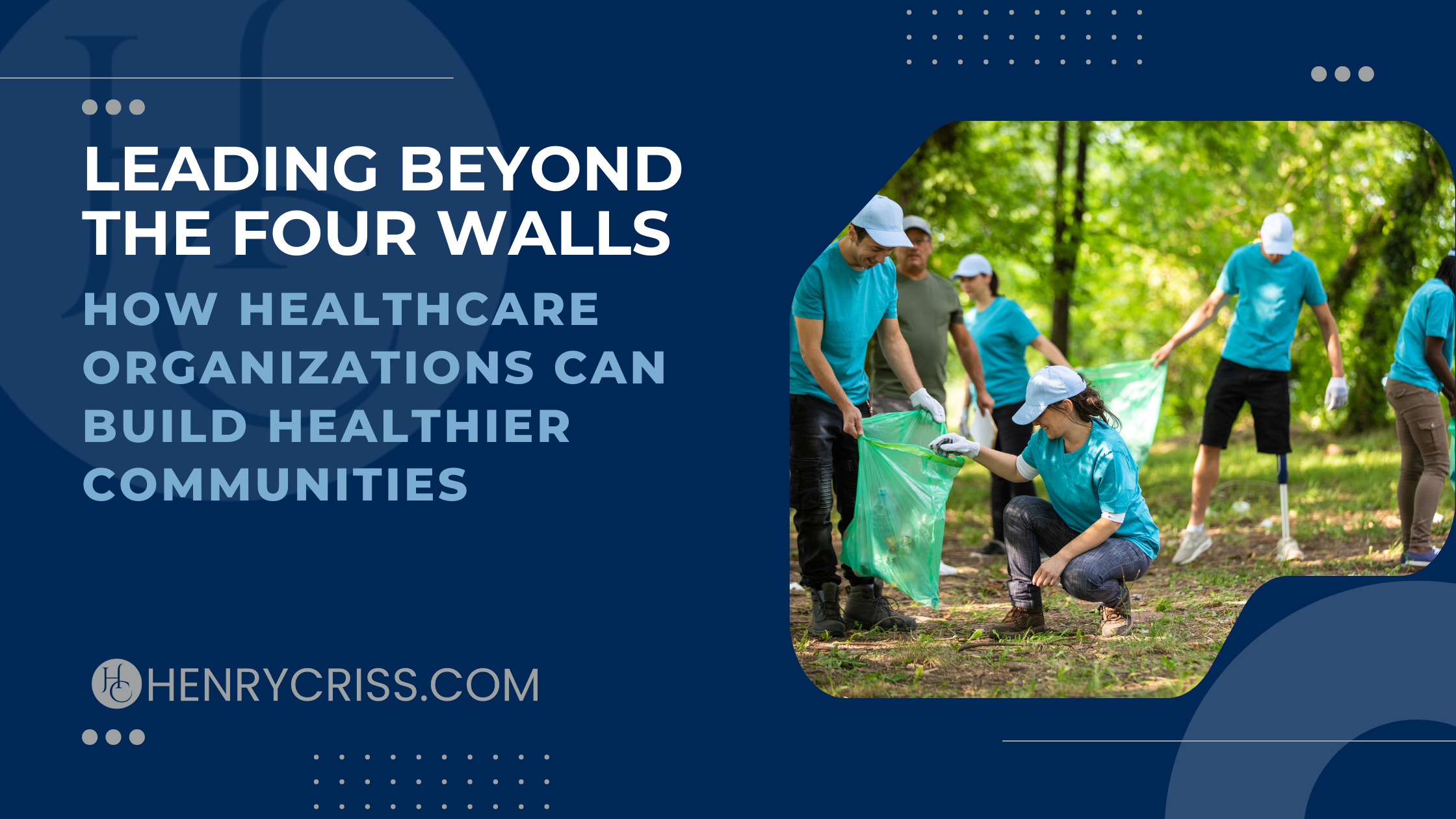
Healthcare leadership is often evaluated through clinical quality metrics, financial performance, and operational efficiency. These measures matter. Yet the most trusted and resilient healthcare organizations understand a deeper truth: no healthcare organization exists apart from the community it serves.
Hospitals, health systems, physician groups, dental practices, and specialty clinics are all shaped by their communities. The health of the organization and the health of the surrounding population are inextricably linked. Organizations that recognize this move beyond transactional care delivery and embrace a broader role as stewards of community health.
This is not philanthropy as an afterthought. It is strategic, values-driven leadership.
From Care Delivery to Community Stewardship
Healthcare is evolving from a system designed to treat illness to one responsible for sustaining wellbeing. Patients, payers, employees, and regulators increasingly expect healthcare organizations to address the factors that influence health outside the clinical encounter.
Organizations that lead well in this environment shift their mindset. They see themselves not only as sites of care, but as community anchors. They invest intentionally in relationships, partnerships, and initiatives that improve health outcomes beyond the exam room or hospital bed.
A practical framework for this work centers on three enduring leadership investments: time, talent, and treasure.
Investing Time: Leadership Presence Builds Trust
Time is one of the most powerful and overlooked assets in healthcare leadership. When executives, physicians, and senior leaders are visibly engaged in the community, trust deepens.
This engagement can take many forms: participation in civic organizations, nonprofit boards, school partnerships, public health coalitions, faith-based initiatives, or workforce development efforts. These settings allow leaders to listen, learn, and understand the lived realities shaping patient health.
Leadership presence outside the organization also strengthens credibility. Communities are more likely to trust healthcare organizations whose leaders are known, accessible, and invested, not just during crises, but consistently over time.
Investing Talent: Extending Expertise Beyond Clinical Care
Healthcare organizations possess extraordinary talent, clinical, operational, educational, and administrative. When that expertise is shared beyond traditional care delivery, its impact multiplies.
Hospitals and health systems may deploy talent through community education programs, preventive health initiatives, mobile clinics, mentorship programs, or partnerships with schools and employers. Smaller organizations can contribute through workshops, screenings, advisory roles, and collaborative projects with local nonprofits.
This investment benefits both the community and the organization. Team members who are encouraged to use their skills in service of a broader mission report higher engagement, stronger professional fulfillment, and deeper loyalty. In an era of workforce burnout, connecting daily work to meaningful community impact is not optional, it is essential.
Investing Treasure: Aligning Resources With Purpose
Financial investment is often the most visible component of community engagement, but also the most easily misdirected. Writing checks without strategy rarely produces lasting outcomes.
Effective healthcare organizations align financial resources with initiatives that reflect their mission and address real community needs. These may include supporting access to care programs, transportation services, food security efforts, mental health resources, veteran services, or youth wellness initiatives.
Successful organizations treat these investments with the same discipline applied to clinical and operational initiatives. Clear goals, defined partnerships, accountability, and measurement ensure that resources are used responsibly and sustainably.
When treasure is aligned with purpose, community investment strengthens organizational reputation, reinforces trust, and creates long-term shared value.
The Strategic Return on Community Leadership
Community engagement is sometimes viewed as separate from the core business of healthcare. In reality, it is deeply connected.
Organizations that invest in their communities experience stronger patient loyalty, improved employee retention, enhanced brand credibility, and greater resilience during periods of disruption. They are chosen not only for convenience or capacity, but because they are trusted partners in health.
For healthcare leaders, the return on community investment is not only social, it is strategic.
Leading With Intentionality
Healthcare organizations of every size have an opportunity to lead beyond their walls. Large systems bring scale and reach. Smaller organizations bring agility and intimacy. Both can drive meaningful community impact when leadership is intentional.
By investing time, talent, and treasure, healthcare organizations can do more than deliver care. They can help build healthier, stronger communities and create organizations that are trusted, resilient, and enduring.