

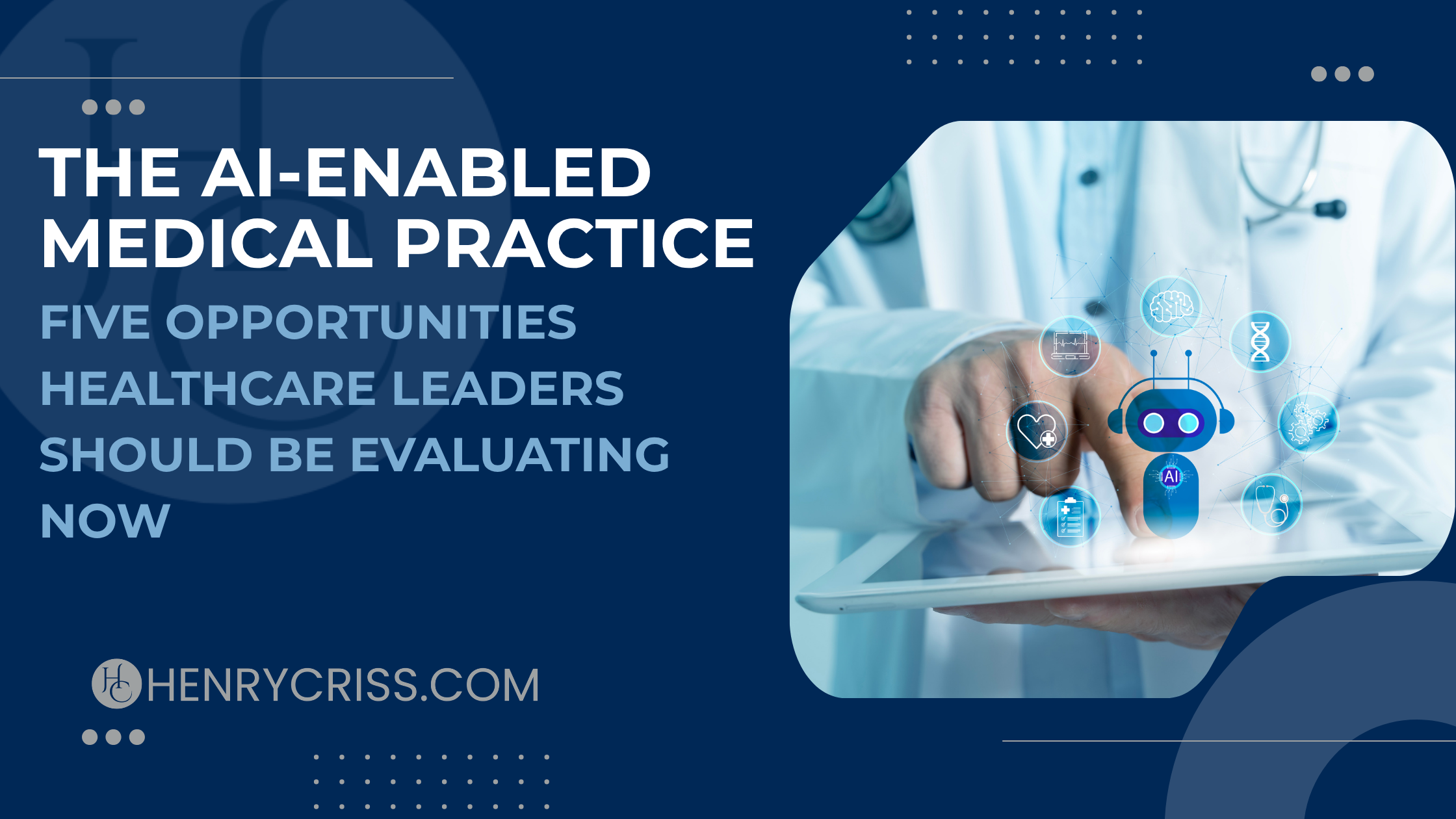
The AI-Enabled Medical Practice: Five Opportunities Healthcare Leaders Should Be Evaluating Now
The Discipline of Simple: Why Small Things Produce Big Business Results
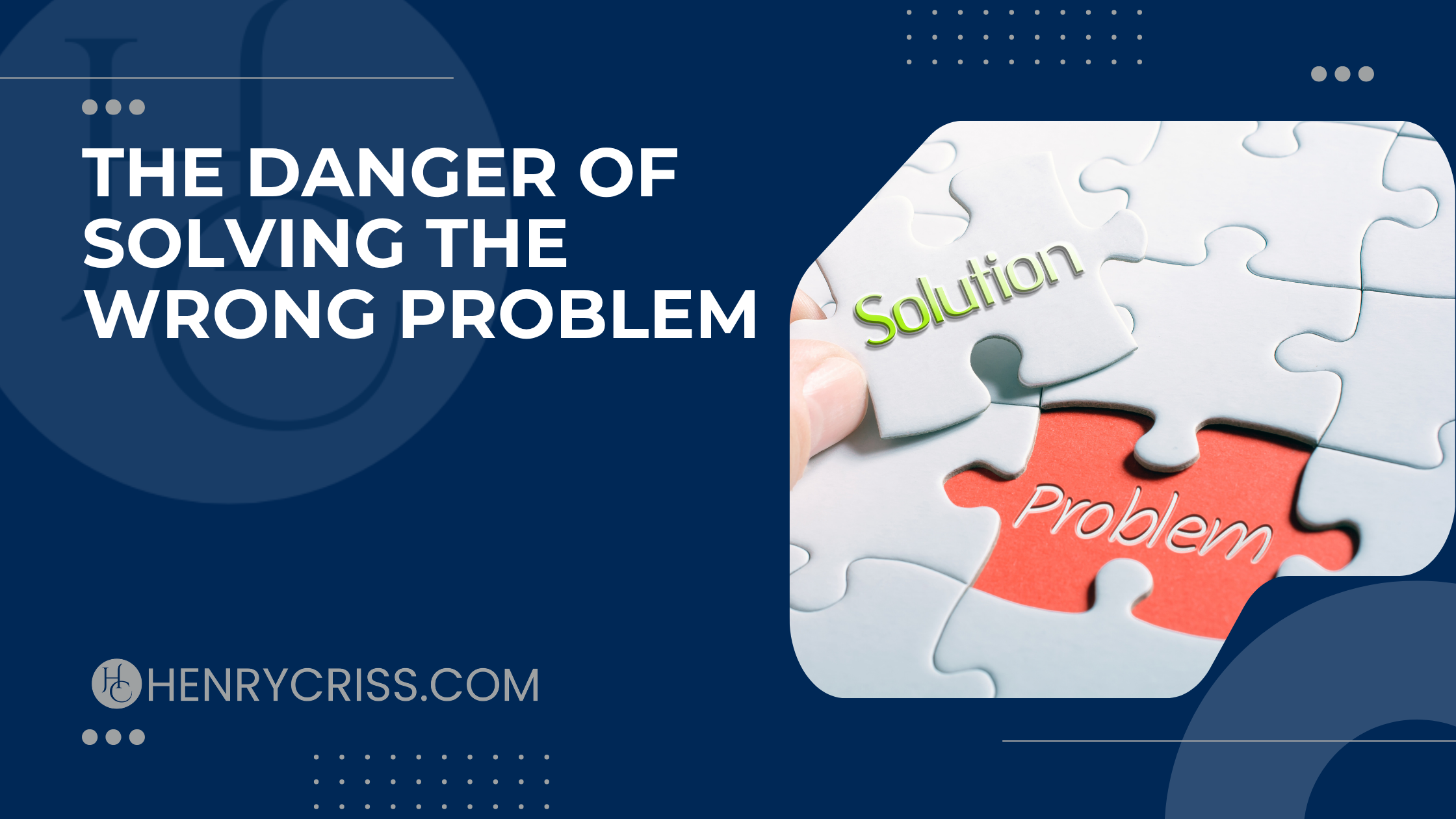
The Danger of Solving the Wrong Problem
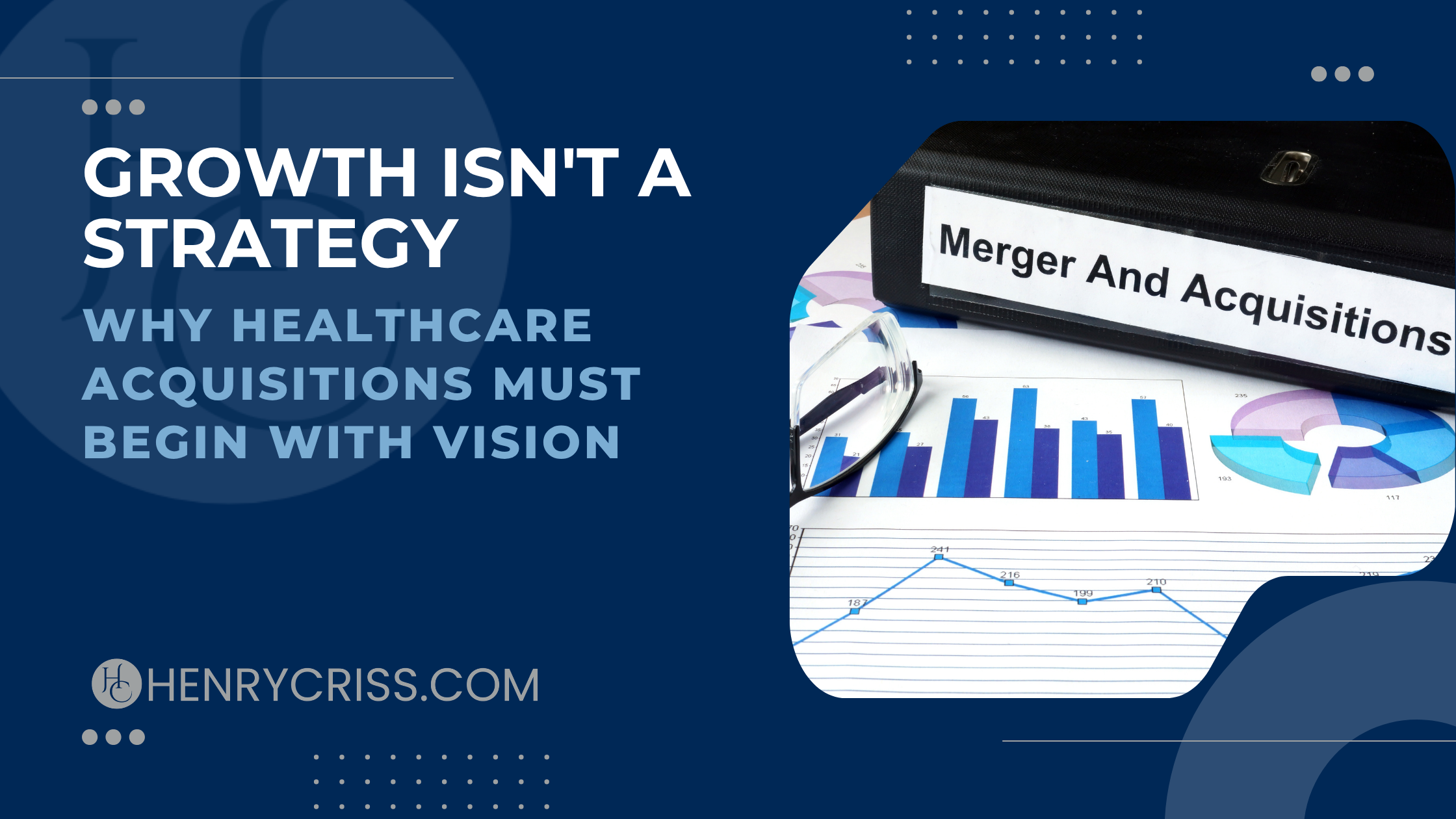
Growth Isn't a Strategy: Why Healthcare Acquisitions Must Begin with Vision
The Hospitality Advantage: Why the Patient Experience Is Becoming Healthcare's Competitive Edge
Decision Leadership: The Missing Clinical Skill in Private-Pay Healthcare

Healthcare and Wellness Acquisitions: The Overlooked Value Creation Challenge
The White Coat Still Matters: Building Trust in the Age of the Wellness Influencer

South Carolina at a Crossroads: What We’re Getting Right and Where We Need to Grow
Not long ago, a friend of mine asked me a simple question that stuck with me: What is South Carolina doing right, and where do we need to improve?
At first glance, it feels like an easy question. But the more I thought about it, the more I realized it gets to the heart of where we are as a state right now.
Because South Carolina is growing. And not just incrementally, but at a pace that’s hard to ignore.
From the mountains to the coast, people are choosing to move here, build businesses here, and put down roots here. That kind of growth doesn’t happen by accident. It’s worth asking why it’s happening, and just as importantly, whether we’re prepared for what comes next.
Root Cause Analysis: The Leadership Skill That Solves Problems for Good
In leadership—and in life—it’s easy to confuse activity with progress.
A problem shows up. A patient isn’t improving. A team member underperforms. A process breaks down. The instinct is to act quickly, fix what’s visible, and move on.
But too often, the same issue comes back.
That’s where root cause analysis changes everything.
What Is Root Cause Analysis?
Root cause analysis (RCA) is the process of identifying the underlying reason a problem exists—not just addressing its symptoms.
Think of it this way:
A symptom is what you see.
A root cause is why it keeps happening.
Leaders who master RCA don’t just solve problems—they eliminate them.
Culture Is the Job: Why Organizational Culture Still Wins, and Always Will
Strategy matters. Systems matter. Talent matters. But organizational culture? Culture is the multiplier.
Culture is the invisible operating system of an organization. It shapes how decisions are made when no one is watching, how people treat one another under pressure, and how consistently an organization delivers on its mission. You can have the best strategy in the world, but if your culture is weak, misaligned, or undefined, execution will always fall short.
When I think about how to define and build a strong organizational culture, I come back to a simple, powerful framework articulated by Capt. Mark VonAppen: The Big Four.
I first encountered this framework during my time in the fire service. Capt. VonAppen is a respected fire service leader known for his clarity around expectations, accountability, and team performance in high‑stakes environments where culture is not a buzzword,it’s a matter of trust, safety, and mission success. His principles resonated with me then, and they have stayed with me because they translate seamlessly from emergency services to healthcare, business, and leadership at every level.
These principles are not slogans. They are expectations. And when they are clearly defined, consistently reinforced, and modeled by leadership, they form the backbone of a healthy, high-performing culture.
Leading Beyond the Four Walls: How Healthcare Organizations Can Build Healthier Communities
Healthcare leadership is often evaluated through clinical quality metrics, financial performance, and operational efficiency. These measures matter. Yet the most trusted and resilient healthcare organizations understand a deeper truth: no healthcare organization exists apart from the community it serves.
Hospitals, health systems, physician groups, dental practices, and specialty clinics are all shaped by their communities. The health of the organization and the health of the surrounding population are inextricably linked. Organizations that recognize this move beyond transactional care delivery and embrace a broader role as stewards of community health.
This is not philanthropy as an afterthought. It is strategic, values-driven leadership.

Artificial Intelligence in Private Medical Practice: Powering the Next Generation of Patient-Centered Care
Artificial Intelligence (AI) is no longer the future of medicine. It is here, quietly transforming how private practices operate, communicate, and deliver care. At Fraum Health, we see AI as a natural extension of our mission to restore, revitalize, and empower patients to live vibrant lives. Used wisely, AI does not replace the human touch—it amplifies it.

Healthspan: Adding Life to Your Years
Most of us measure life in years. We celebrate birthdays, milestones, and anniversaries as markers of time lived. But what if we shifted the question from how long we live to how well we live? That’s the essence of healthspan—the number of years you get to truly enjoy life with vitality, strength, and purpose.
At Fraum Health, we believe that while lifespan is important, healthspan is what truly matters. Too often, the last decade or more of a person’s life is spent managing chronic conditions, enduring fatigue, or navigating limitations that strip away independence and joy. Our mission is to change that.

Stoic Leadership: How Ancient Virtues Build Modern Business Strength
When the storm hits—a market crash, a public relations disaster, a global pandemic—everyone looks to the leader. Their words, their body language, even the tone of their voice sends a message that can either calm the storm or intensify it.
As someone who has led teams across the military, public service, and now healthcare, I’ve seen this dynamic play out time and again. Early in my career as a United States Marine, I learned that in chaos, calm is contagious. Marines don’t just look to their leaders for orders—they look for reassurance, for steadiness. Years later, as the CFO of a regional transportation authority during the COVID-19 pandemic, I saw that same principle in action. In those uncertain months, our riders and employees depended on public transit for essential services. Fear and confusion were everywhere. My job wasn’t just managing budgets and operations—it was to project calm, set priorities, and give my team the confidence to serve our community despite the chaos.
Leveraging AI to Expand Healthspan: The Next Frontier in Wellness and Longevity
Healthcare is in the midst of a profound transformation. For much of modern history, the emphasis has been on treating disease and extending lifespan. Today, people are asking for something more. They want to preserve vitality, independence, and the ability to fully enjoy the life they live as they grow older. This is the shift from lifespan to healthspan, and Artificial Intelligence (AI) is emerging as one of the most powerful tools to bring that vision to life.
When Mission Meets Margin: Balancing Purpose and Profit in Private Practice
In private practice, most of us are driven by a deep sense of purpose. We want to help people heal, improve lives, and serve our communities. That sense of mission is what gets us into this work. But staying in it requires more than passion. It requires profit.
It may feel uncomfortable to say out loud, but the truth is this: your practice cannot fulfill its mission if it is not financially sustainable. Mission and margin are not in conflict. When handled intentionally, they can actually strengthen each other.
As someone who leads a purpose-driven healthcare business, I have spent years learning how to navigate the tension between delivering exceptional care and maintaining a profitable, scalable operation. Here are a few lessons I have learned.

Building a High-Performance Culture: Key Factors for a Positive and Productive Work Environment
At Fraum Health, our mission is to empower individuals to live pain-free, vibrant lives through personalized restorative medicine and proactive wellness care. But behind every treatment protocol, every patient success story, and every innovation in care delivery is something just as critical: culture.
As CEO, I’ve learned that building a high-performance culture isn’t a project—it’s a mindset. It’s about creating an environment where people are energized by purpose, driven by excellence, and committed to something bigger than themselves. At Fraum Health, our team culture is the engine that powers our results.

Gross vs. Net Income: The Difference Between Profit and Financial Trouble
Many small business owners assume that as long as money is coming in, they must be making a profit. However, failing to understand the difference between gross income and net income can create major financial problems. Gross income is the total revenue a business generates, but net income is what’s left after expenses. If you’re not carefully tracking your net income, you could be losing money without realizing it.

The Business of Healthcare: Building Resilient Teams with a Patient-Centered Culture
In today’s rapidly evolving healthcare landscape, medical practices face mounting challenges in maintaining a resilient workforce while ensuring high-quality patient care. Workforce burnout, employee turnover, and operational inefficiencies can directly impact patient outcomes, making it essential for healthcare leaders to cultivate a strong, patient-centered organizational culture. Effective leadership plays a critical role in fostering an environment that supports both staff well-being and optimal patient experiences.
This article explores transformative leadership strategies to build resilient teams, enhance employee engagement, and create a culture that prioritizes both healthcare professionals and the patients they serve.